


In a report commissioned for us in 2001 it was reported that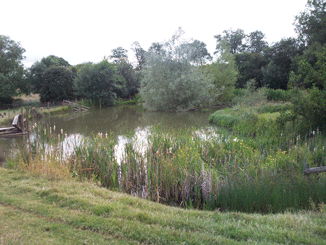 hedges were the largest habitat type on the farm. Hedgerows on the farm include old parish boundaries which have in excess of 8 species per 30 meters, this indicates that the hedge is likely to be 500+ years old. These hedges are home to a large range of wildlife including birds such as Linnets,Yellowhammers and Woodpeckers. These hedges have been restored mainly by laying, with gaping up and then back fenced to protect from over grazing by stock
 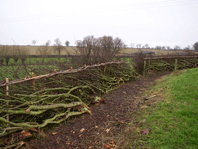 especially sheep. Other hedgerows were trimmed on a 2 to 3 year rotation to allow flowering and fruiting on the years they are not trimmed this provides a valuable food source for birds, animals and insects.
Trees on the farm are valuable, especially hedgerow trees, we have a number of trees which are homes to owls, kestrels, woodpeckers and tree sparrows. Dead trees where there is no safety issue have been left for there benefits for insects and fungi. During the early years of the CSS we planted some new areas of woodland with trees such as ash, oak, silver birch, holly, and field maple.
In these woodland areas we also planted hazel plants that we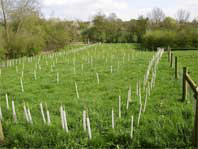 intend to coppice in the next few years. Around the woodlands new hedgerows were planted. Public footpaths in these areas allow walkers through these areas alongside a tributary to the River Sence that meanders through the centre of the farm.
When we took over the farm one field had a spring which regularly flooded an area of the field in this area we decided to dig out a pond area. Over the years this has been left much to its own devices and is now beginning to become established with a number of trees, bulrushes and reeds, an area to the side of this has become a naturally regenerated wetland which we have fenced off under the CSS.
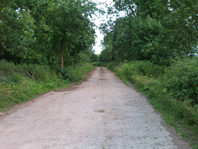 Around the farm we have a number of wildlife corridors, most notably the old A50 which has become overgrown. Badgers, rabbits, pheasants and a host of insects and butterflies use this corridor in conjunction with the brook, woodlands, established field margins and farm tracks to move around the farm.
Besides the noticable features we have also been using many good practice methods of farming, we have established 2m and 6m grass margins around arable fields using a wildlife grass seed mix to create a buffer zone between the crop and hedgerows. All arable fields had a 60m wide conservation headland where no manure was applied this stopped nitrates from leaching into watercourses. We also left all stubble from cereal crops to overwinter as this allowed nesting sites for mammals and birds. 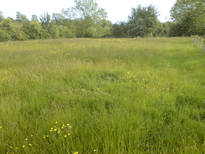 Grassland fields under 3Ha in size which were permenant Pasture have been stocked at a low density to avoid over grazing and this has allowed many plants to rejuvenate. We have some wild flower meadows which we mow late for hay and this allows the wild flowers to drop there seed before haymaking.